
Water Heater Replacement & Repair in Raleigh and Wake County
Free on-site, quotes
No Trip charges!
Rinnai / Essency certified
Licensed & Insured Plumbers
ARC Plumbing installed or repaired more than 250 water heaters in Wake County in the past 12 months, publishes its flat-rate prices on this page, and backs every tank it installs with a 5-year parts-and-labor warranty. NC Plumbing Contractor License #36473. 5.0 stars across 401 Google reviews.
Which water heater is right for your home?
Start with a few questions.
These questions help narrow the options for your home. Skip anything you do not know; we will flag the details that need checking. You may see a planning price range or a recommendation for an in-home assessment. Final equipment sizing, permit requirements, rebate eligibility and your written price are confirmed before work is approved.
Tank, tankless, or Essency
Prices are ARC’s installed flat rates as of September 2026 and include the unit, all labor, and removal of the old heater.
| Tank Bradford White / State | Rinnai tankless RX199 / RXP199 | Essency EXR | |
|---|---|---|---|
| Installed price | $2,478 – $3,056 | $5,141 – $5,845 like-for-like; conversions cost more (see the tankless page) | $5,442 |
| Fuel | Gas, propane, or electric | Natural gas or propane | Electric (240V) |
| Hot water | 40 or 50 gallons stored | About 5.7–6.2 gallons per minute of shower-temperature water at Raleigh’s incoming water temperature — not “endless” for a house running three showers | 80-gallon first-hour rating from a 55-gallon tank |
| Manufacturer warranty | 6-year tank (10-year available on Bradford White) | 15-year heat exchanger, 5-year parts, 5-year labor when registered within 90 days | 20-year tank when registered within 30 days, 6-year parts, transferable to the next owner |
| ARC warranty | 5 years parts and labor; 10 years with a yearly ARC flush plan | 5 years parts and labor from ARC, on top of Rinnai’s; first annual flush free when scheduled the day of install | 5 years parts and labor from ARC, on top of Essency’s |
| Permit needed? | Some like-for-like replacements qualify for an exemption. ARC checks the full requirements for your installation. | Tank-to-tankless conversions usually require a permit. An existing tankless replacement still needs an installation-specific check. | Same location and electric fuel alone do not establish an exemption. ARC checks capacity, input, piping and electrical work. |
| Rebate (Sept 2026) | Enbridge Gas NC $100 on gas units of 0.64 UEF or higher | Enbridge Gas NC $300 + Rinnai $100 on a natural-gas-to-natural-gas replacement; Rinnai $100 only on propane | None. It’s a resistance-electric unit, not a heat pump, so Duke and NC programs don’t apply. |
| Best for | A starting point when existing storage and recovery meet demand and you want a straightforward replacement. | Worth comparing for higher demand when gas supply, venting and simultaneous-use sizing support it. | An option to compare where electrical supply, space and hot-water demand suit the installation, including some attic locations. |
| We’d steer you away if | The proposed tank and recovery rate cannot meet your peak demand. Household size alone does not establish this. | Gas or venting upgrades outweigh the benefit, or a repair or storage tank better meets your needs. | Access, clearances, electrical requirements or demand make another system a better fit. |
What a new tank water heater costs
Installed, including the unit, all labor, removal and disposal of the old heater, and a 5-year parts-and-labor warranty from ARC on top of the manufacturer’s. Prices current September 2026; we re-check them quarterly.
| Unit | Installed |
|---|---|
| 28–40 gallon electric | $2,478 |
| 50 gallon electric | $2,523 |
| 40 gallon natural gas | $2,703 |
| 50 gallon natural gas | $3,007 |
| 50 gallon propane | $3,056 |
Add-ons, quoted only if your house needs them
- Direct-vent (sealed-combustion) gas heater, where the existing unit is direct-vent or the location requires it: +$950
- Expansion tank, required on a closed system (a home with a pressure-reducing valve or backflow preventer on the main): $317
- Temperature-and-pressure relief valve replacement: $114
- FloodStop leak sensor and automatic shutoff valve, installed with a new heater: $364 (standalone $782). We recommend it on any heater above a finished floor.
- Relocating the heater to a different spot: $797, plus electrical if a new circuit is needed
- Permit and inspection, when required (see below): charged at cost as a separate line — $289 on a recent Rinnai conversion
Not included: new gas piping or a new electrical circuit, drywall or carpentry to open up an access, and any 75-gallon or power-vent unit, which we quote on site.
Which size tank
Our rule is simple: start with what you have and whether it’s meeting your needs. If a 40-gallon has kept up for years, replace it with a 40. If you run out, go to 50. If you’re a family of four or more and everyone’s past age 12, a 50-gallon tank is usually the ceiling of what a tank can do for you, and that’s the point where we’ll show you the Essency or a Rinnai instead. We won’t upsell you a bigger tank than your house uses.
Why Bradford White and State
Bradford White sells only through licensed plumbers — you cannot buy one at a big-box store — and builds the same tank whether you buy the 6-year or the 10-year warranty; the difference is the warranty, not the steel. State’s ProLine carries a 6-year tank-and-parts warranty. Both manufacturers cover parts only; the 5-year labor coverage on this page is ARC’s, and on a tank the labor is most of what a warranty call costs. Have ARC do the manufacturer-recommended yearly flush and the ARC warranty on a tank runs 10 years.
Repair or replace?
Repair it
When the heater is under 8 years old, the tank isn’t leaking, and the problem is a part: a failed element or thermostat on an electric unit, a gas valve or thermocouple on a gas unit.- Full rebuild — new thermostat and elements (electric) or gas valve / thermocouple (gas): $450-$550
- Expansion tank: $300-$400
- T&P valve: $100-$278
Replace it
When water is coming from the tank itself — not a fitting; the tank has rusted through and there is no repair. When the hot water is rusty or brown. When it’s past 10–12 years and needs a second repair, or when the repair would cost more than a third of a new heater. A 12-year-old tank with a $500 rebuild in it is still a 12-year-old tank.Popping and rumbling
That’s sediment on the bottom of the tank being boiled. A flush ($250-$300) usually fixes the noise and buys efficiency back; on a tank past 10 years the sediment has often already done its damage and we’ll say so.
Slow hot water at a far bathroom is not a water heater problem
It’s the distance the water has to travel. A bigger tank won’t fix it; a recirculation system will — $1,100-$1,500 with a comfort valve (uses your existing cold line as the return) or $2,000-$2,500 with a dedicated new return line. If you’re going tankless, the Rinnai RXP199 has the pump built in!
What’s involved, how long it takes, and whether you need a permit
Like-for-like tank swap: four hours or less
Usually same day. We shut off the water and fuel, drain and remove the old heater, set the new one, connect water and gas or electric, install the pan and expansion tank if needed, fill it, check for leaks, light or power it, and haul the old one away.
Before we quote anything we look at
- Where the heater is now
- The size of your gas service, and whether it’s a high- or low-pressure system
- The size of the gas line to the heater — or to wherever you’d like it
- Access to the space, and clearances
That’s a five-minute look and it’s why our on-site quote is the final price.
Do you need a permit?
North Carolina law (G.S. 160D-1110) says no permit is required to replace a water heater in a one- or two-family home if a licensed plumber does the work, leak-tests the gas piping, and the new heater is the same fuel, same location, same capacity, same input, and same venting as the old one. That covers most tank swaps.
A permit is typically required when you change fuel (electric to gas), change location (moving it out of the attic), or change input and venting (a 40,000 BTU tank to a 199,000 BTU tankless). When one is required, we pull it, schedule the inspection, and show the fee as its own line on your invoice.
Essency EXR: the tank most plumbers don’t offer
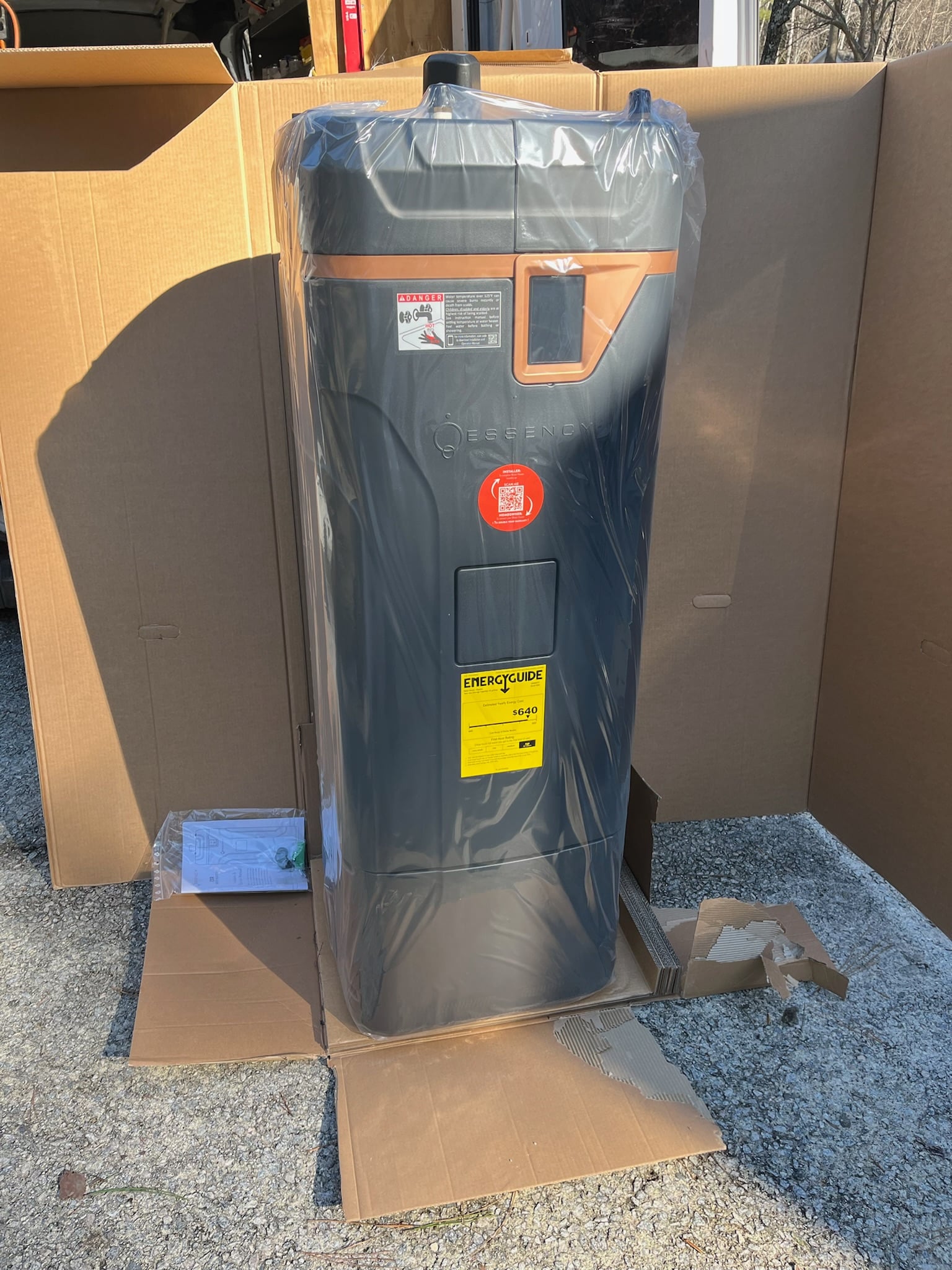
The Essency EXR is an electric tank water heater with a double-wall polymer tank instead of glass-lined steel. There is no metal tank to rust, no anode rod to replace, and no sediment sitting on the bottom because the water doesn’t sit still. It heats through two 4,500-watt elements on a stainless plate exchanger and delivers an 80-gallon first-hour rating from a 55-gallon footprint.
$5,442 installed, September 2026
ARC is a listed Essency installer for Wake County, and backs every Essency it installs with its own 5-year parts-and-labor warranty on top of the manufacturer’s.

When we recommend it
- Your water heater is in the attic. Attic heaters fail by leaking through the ceiling. Essency’s tank is warranted against leaks for 20 years (registered within 30 days), and it’s an atmospheric tank, so there’s no pressure relief valve to discharge and no expansion tank to add.
- You don’t have gas and don’t want to pay for a new gas service to go tankless.
- You want more capacity than a tank without the flow limits of a tankless: an 80-gallon first-hour rating, no gas line, no venting.
- You’re a family of four or more on electric and a 50-gallon tank runs out.
What to know before you say yes
- It needs a 240-volt, 25-amp circuit on 10-gauge wire. Most existing electric water heater circuits are 30 amps, so it usually connects to what’s there; if not, ARC Electric handles the circuit.
- It’s 65 inches tall, 22 wide, 26 deep and about 100 pounds. A crawlspace with a low ceiling and no other viable spot is the one place we’ve had to say no — though we’ve found a creative location more often than not.
- It does not qualify for the Duke Energy or Energy Saver NC rebates. Those are for heat pump water heaters only. Essency is resistance-electric. Anyone who tells you otherwise is wrong.
- The 20-year tank warranty requires registration within 30 days; 10 years if not registered. It transfers to the next owner as long as the unit stays where it was installed.
Heat pump water heaters: we install them, and here’s the honest math
A heat pump (hybrid) water heater pulls heat from the surrounding air and can cut electric water heating cost substantially. It is also the only type that qualifies for the current rebates: Duke Energy pays $500 on a 50-gallon or $800 on an 80-gallon unit, and Energy Saver NC pays up to $1,750 for income-qualified households (over 150% of area median income is not eligible). The federal tax credit that used to cover these expired December 31, 2025.
We install them. We don’t push them, because they need a large, open space (every manufacturer specifies a minimum room volume) or a ducted intake, they cool and dehumidify the space they sit in (fine in a garage, not in a closet), they run louder than a tank, and the compressor is one more thing to fail. If you’ve got a garage or a big basement and you’re on Duke electric, ask us — the rebates can close most of the gap. Quoted on site.
250 water heaters a year, across Wake County
What water heater customers say
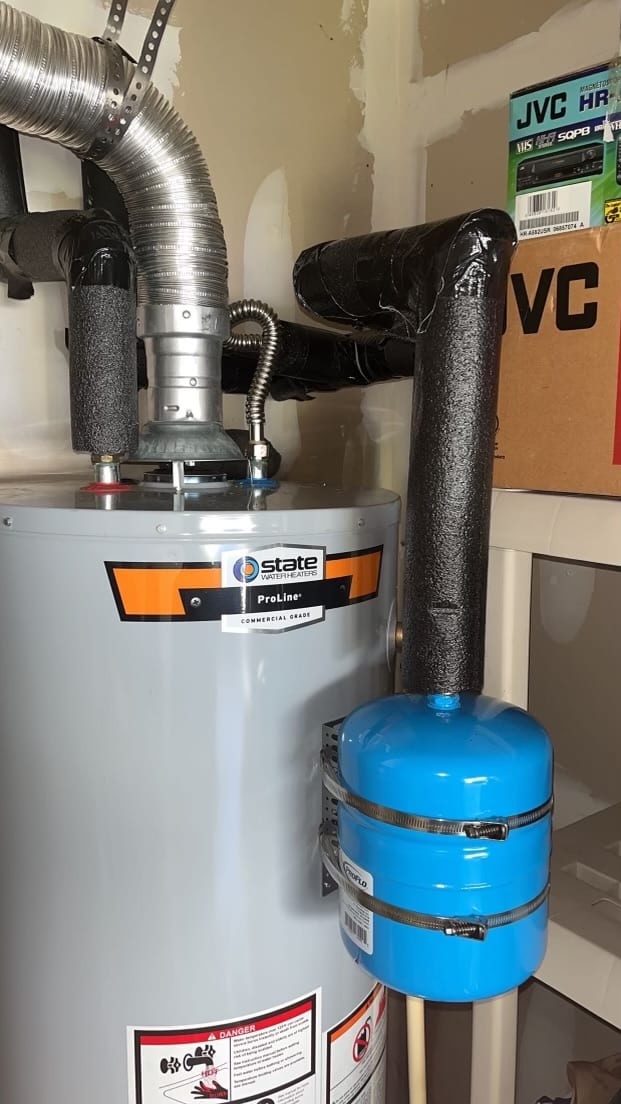
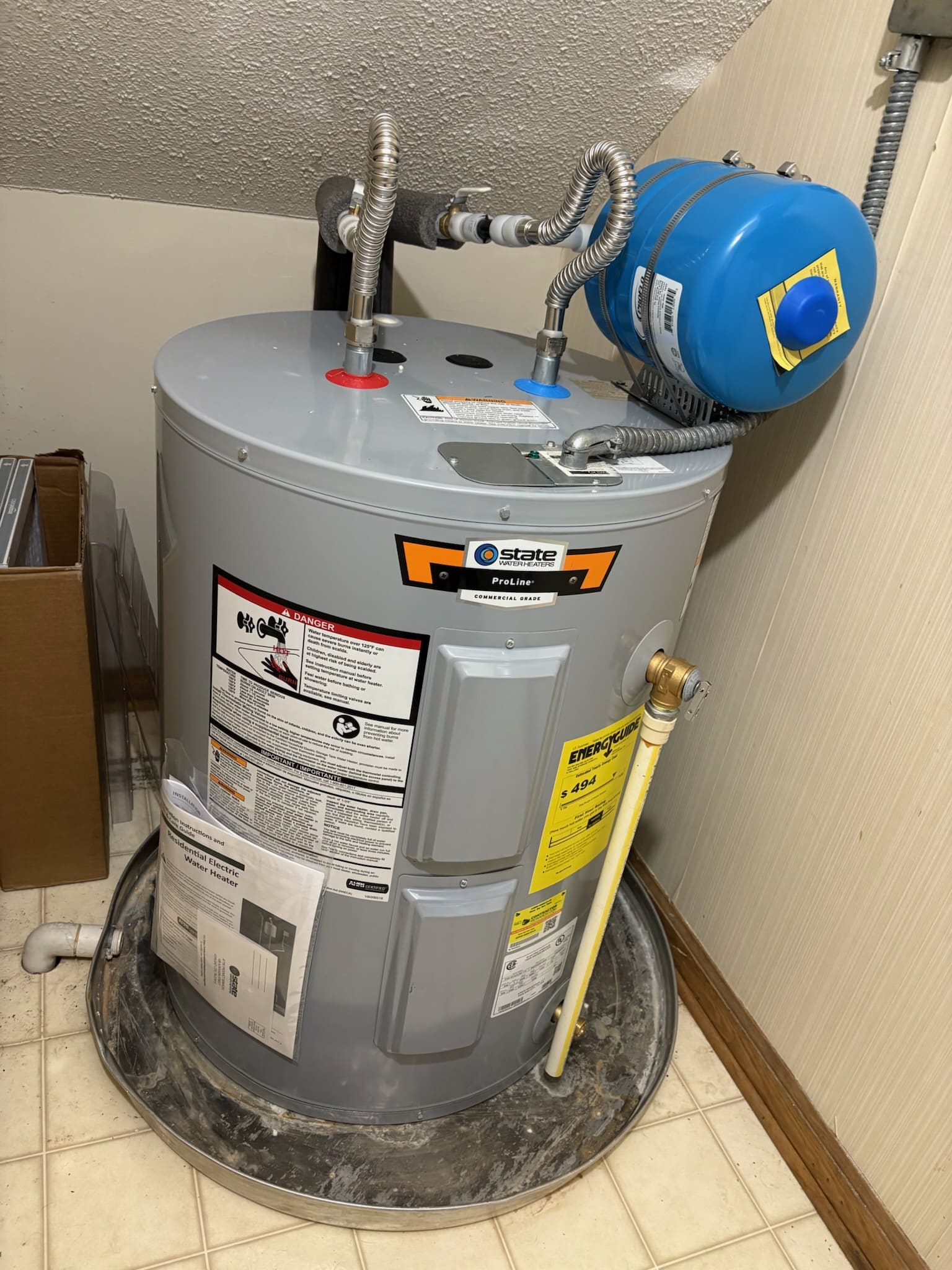
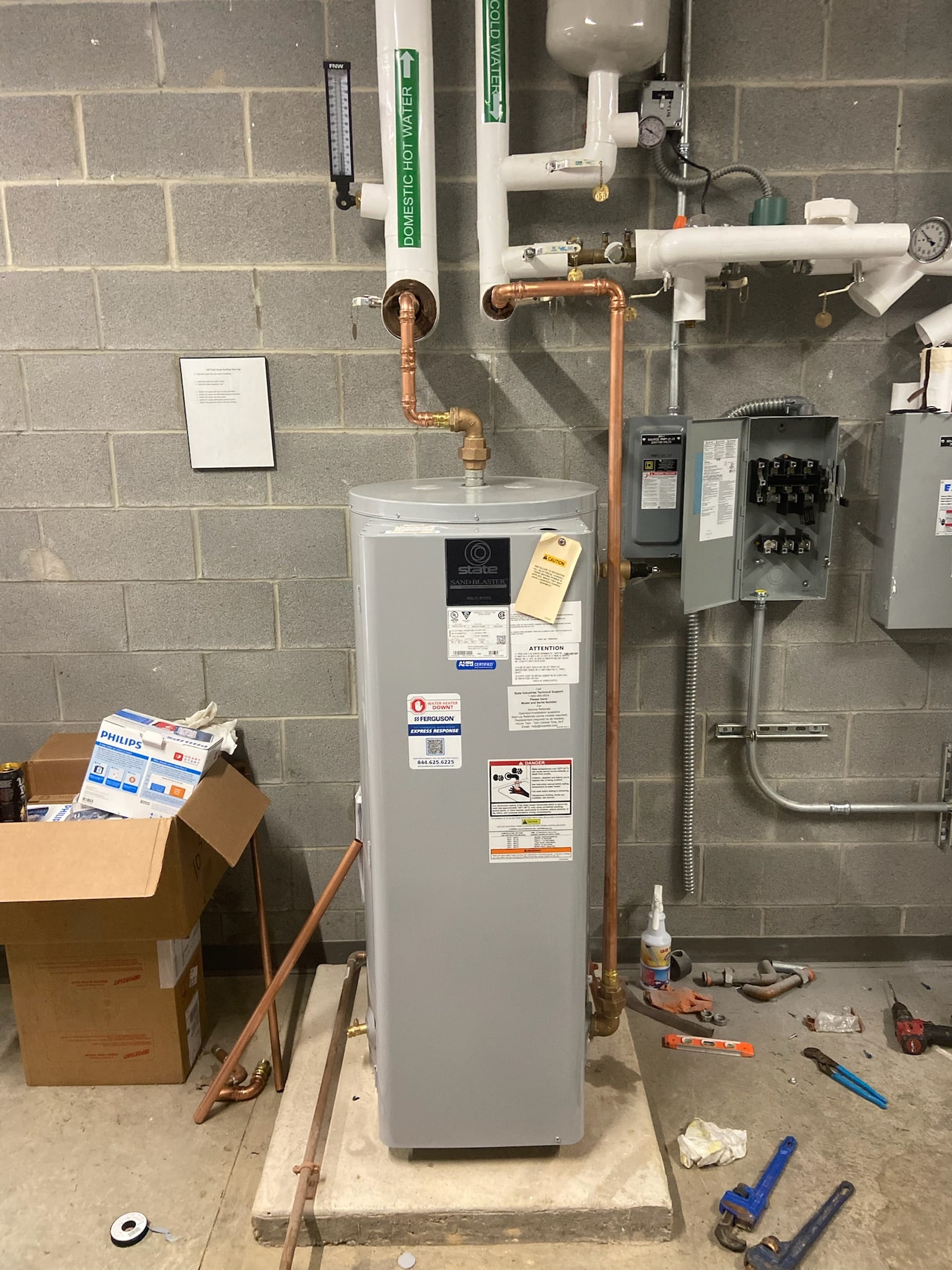
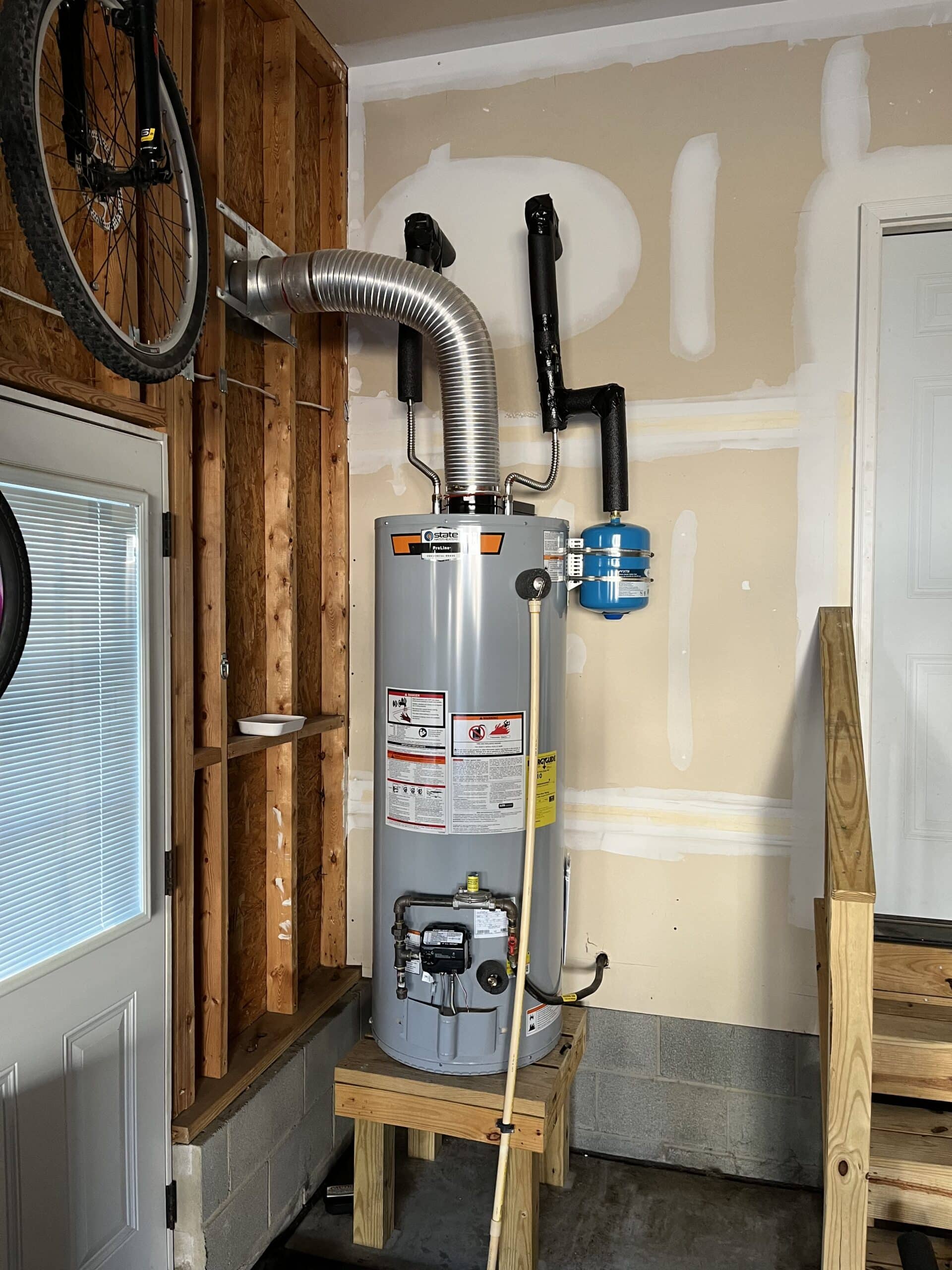
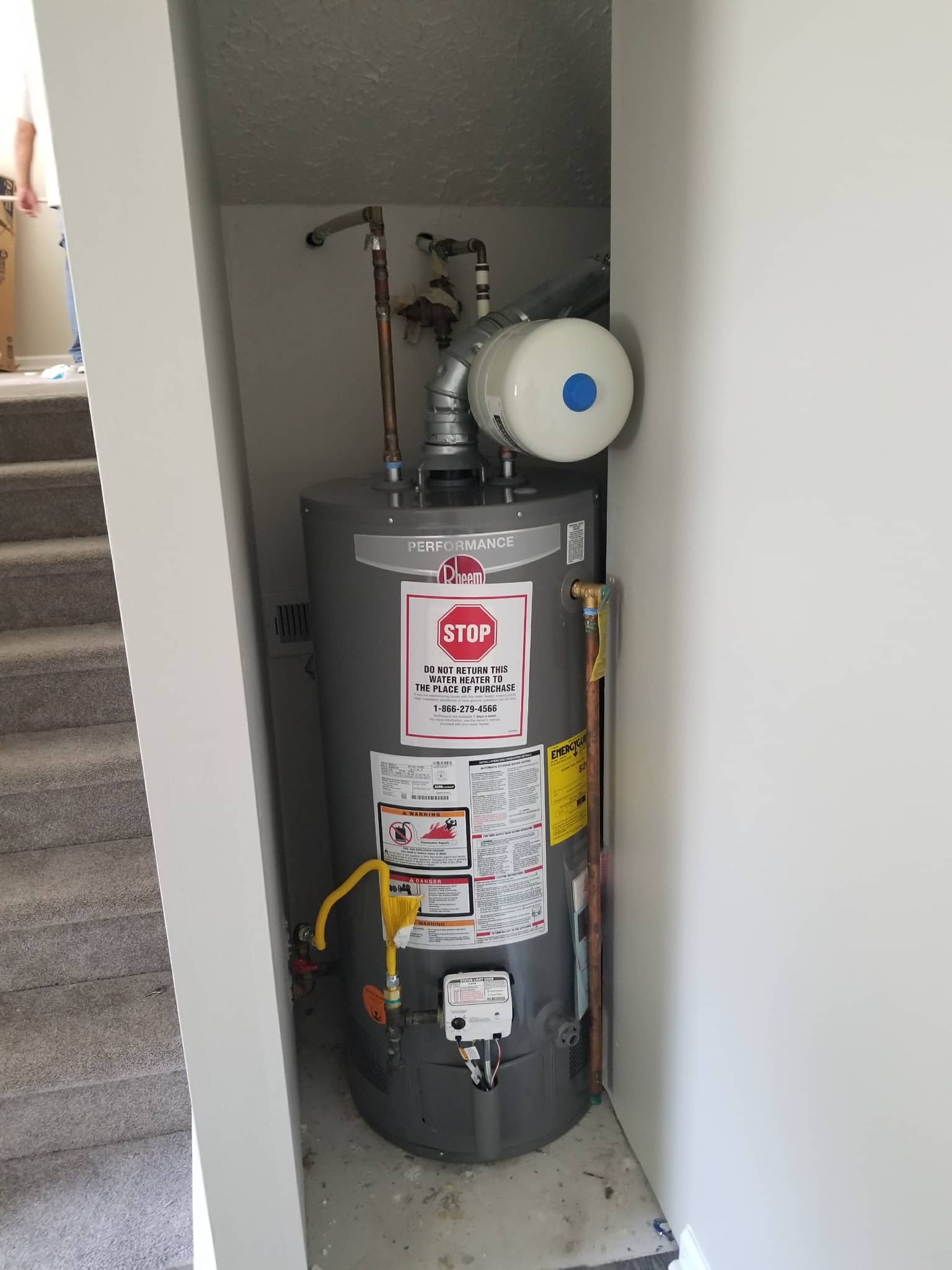
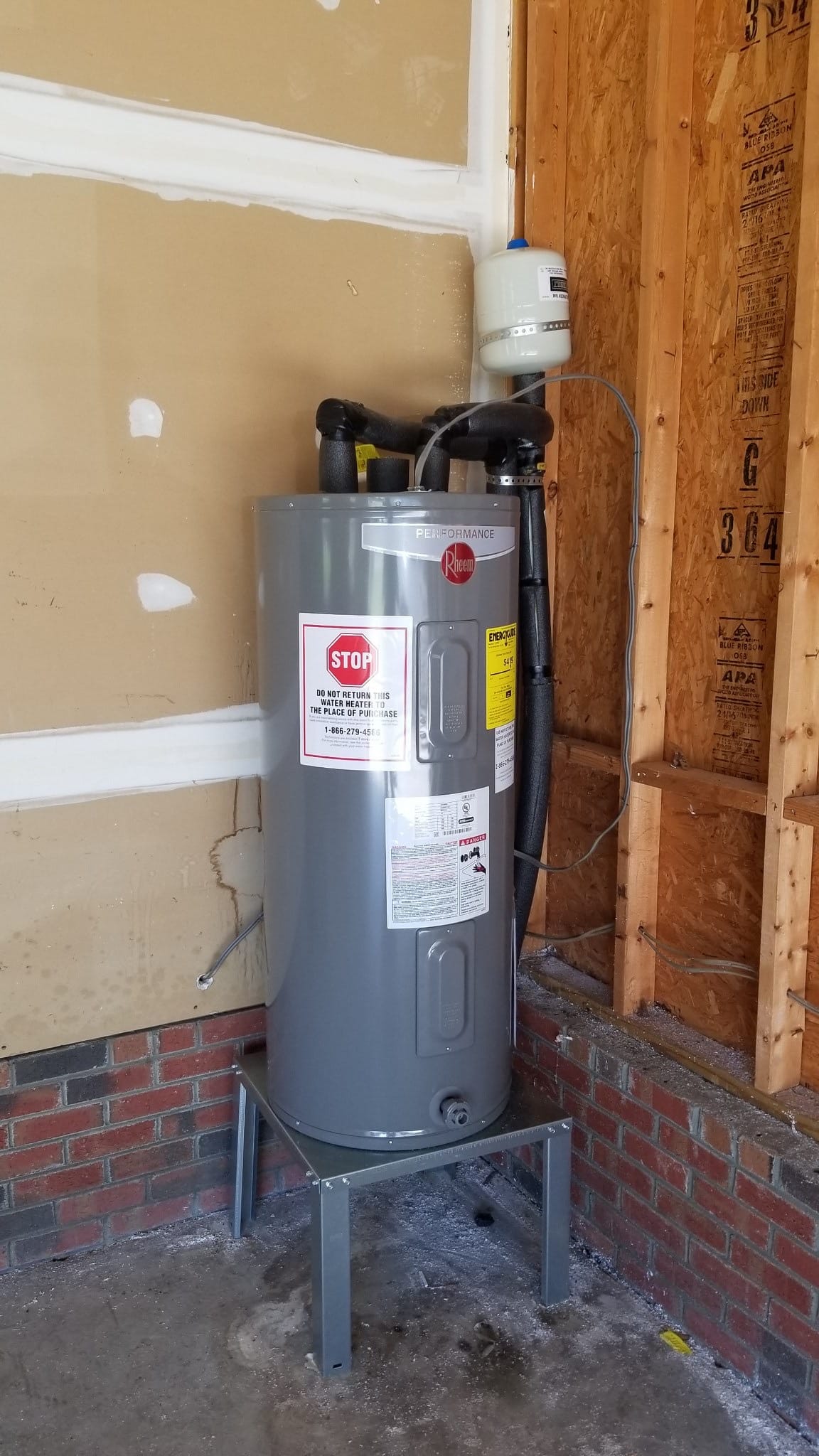
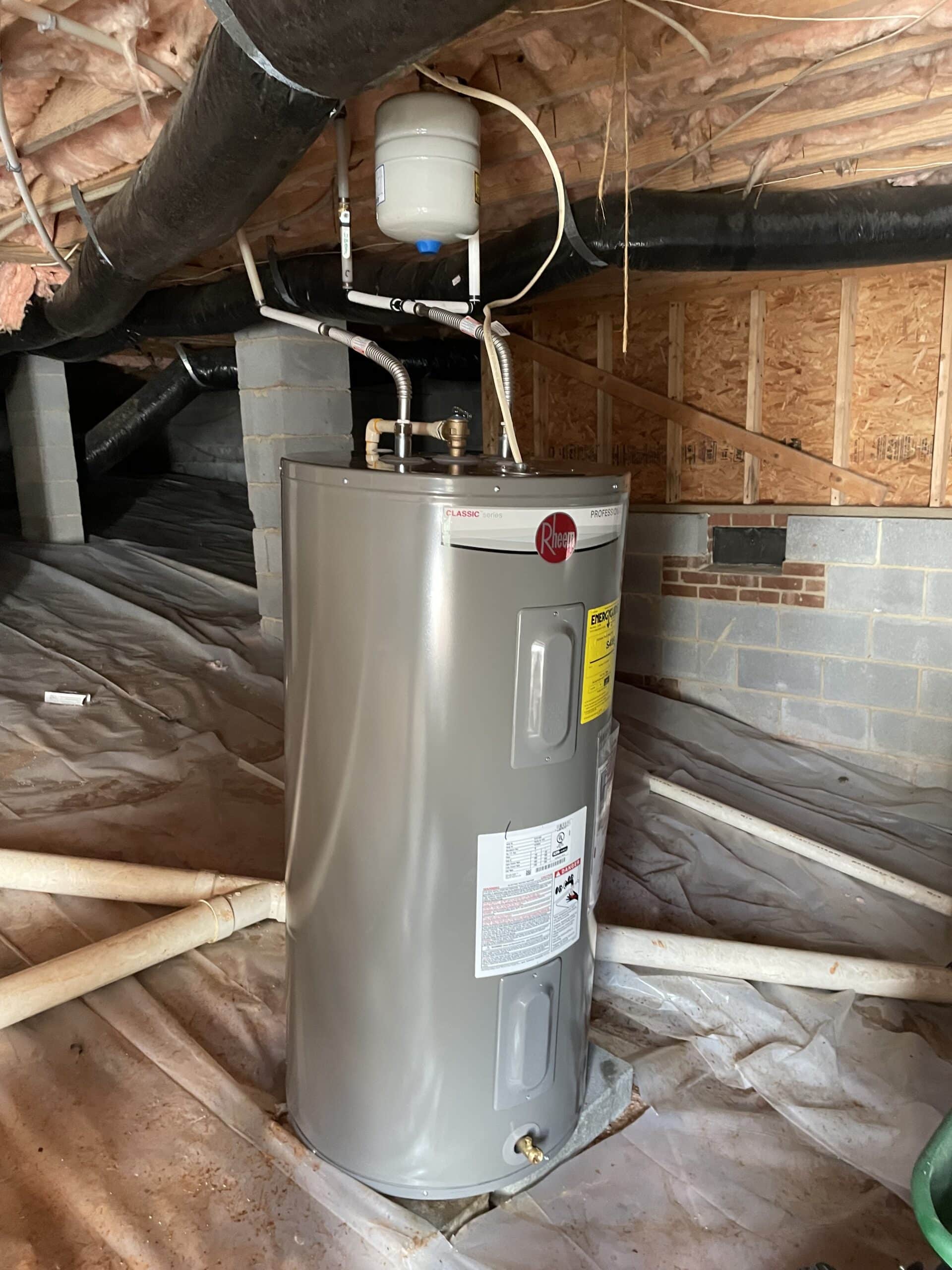
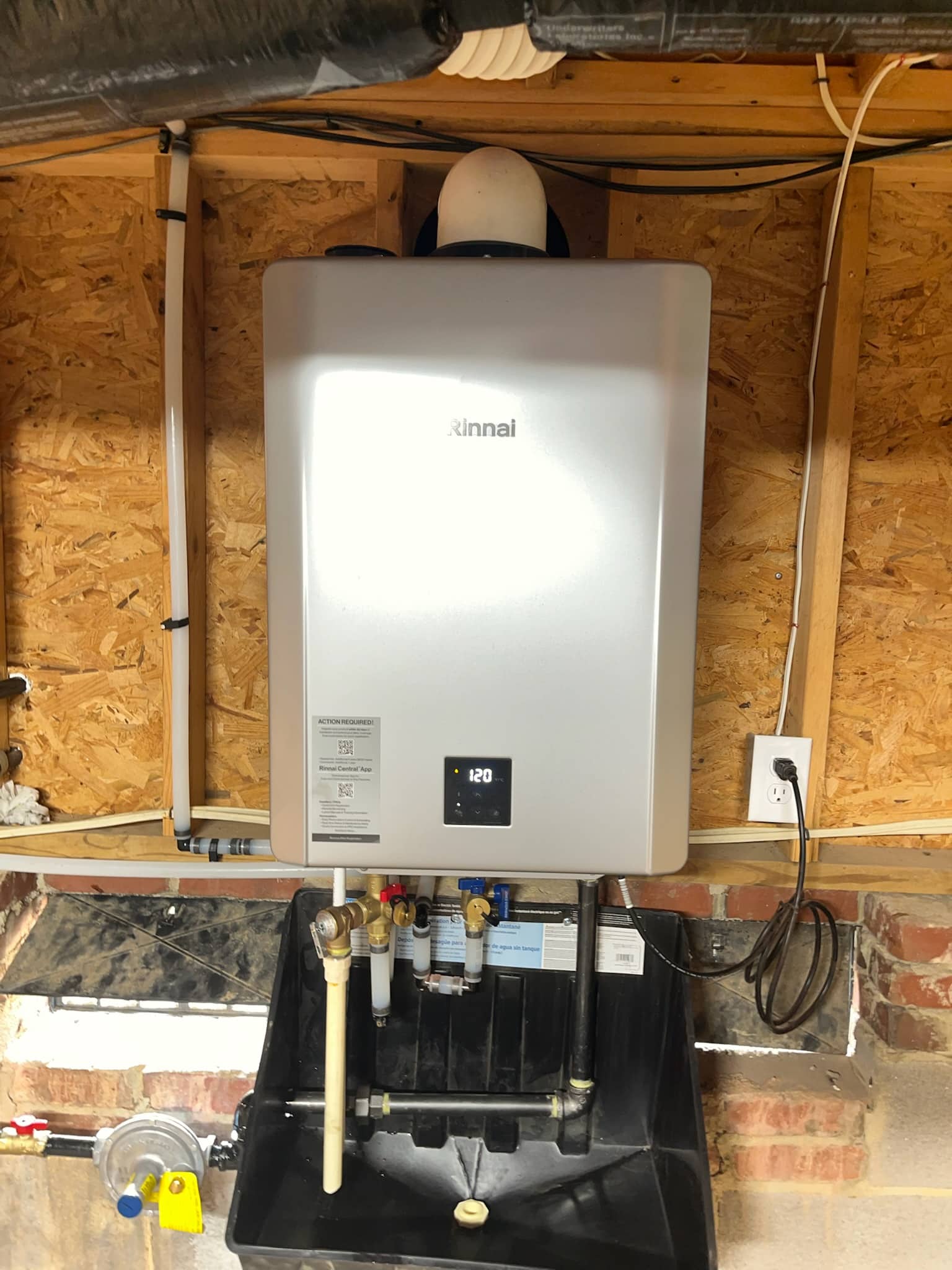
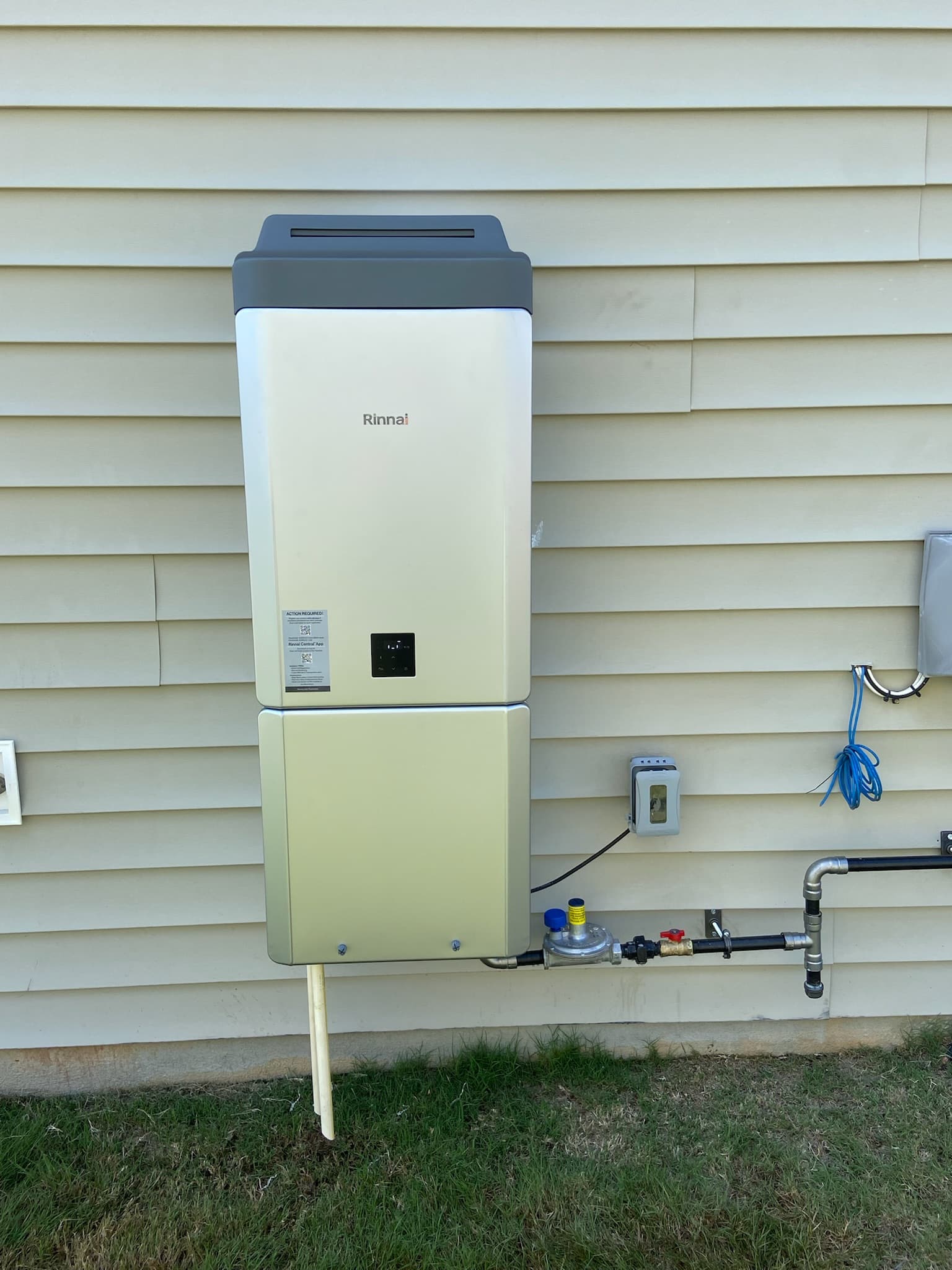
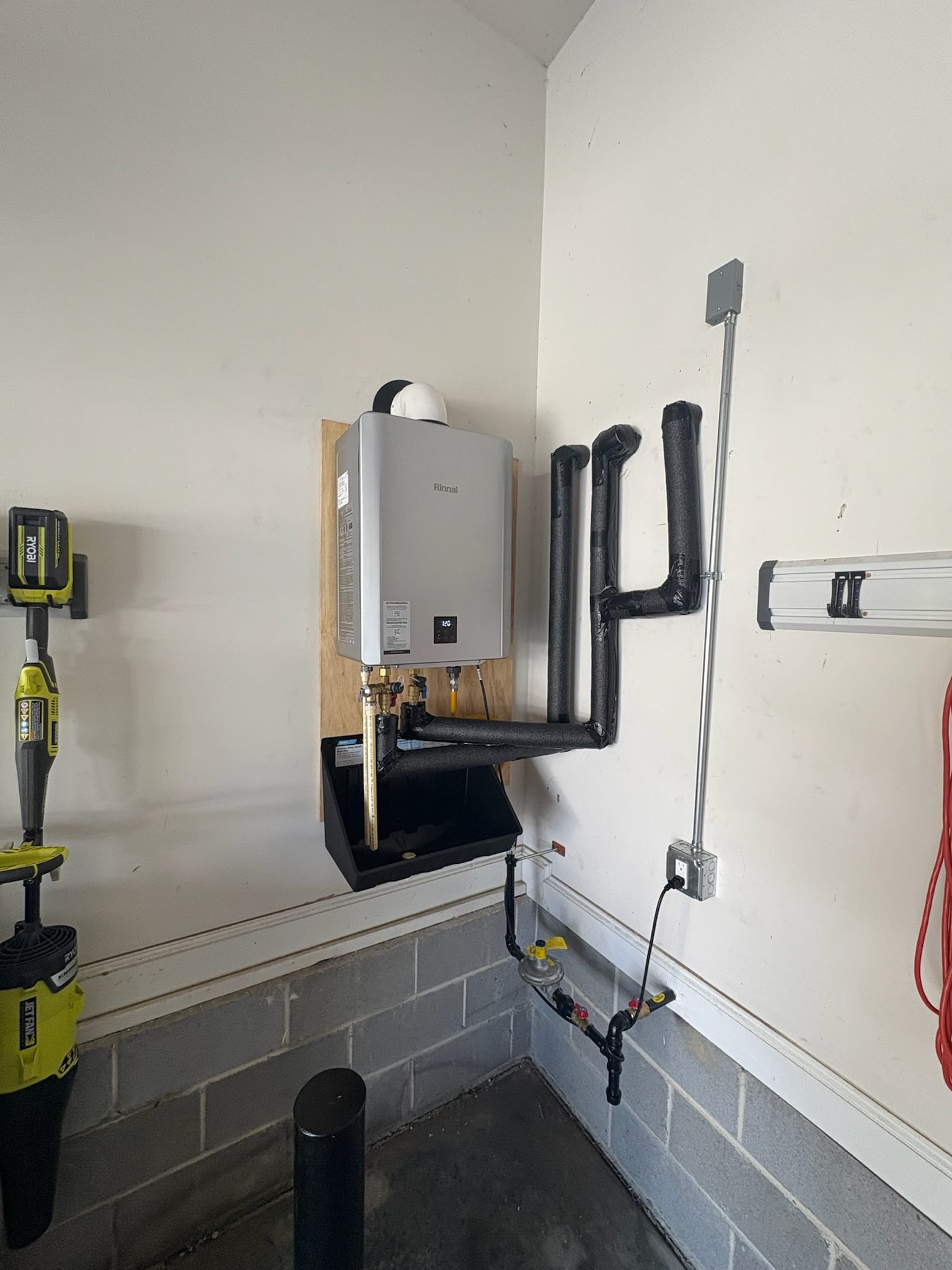
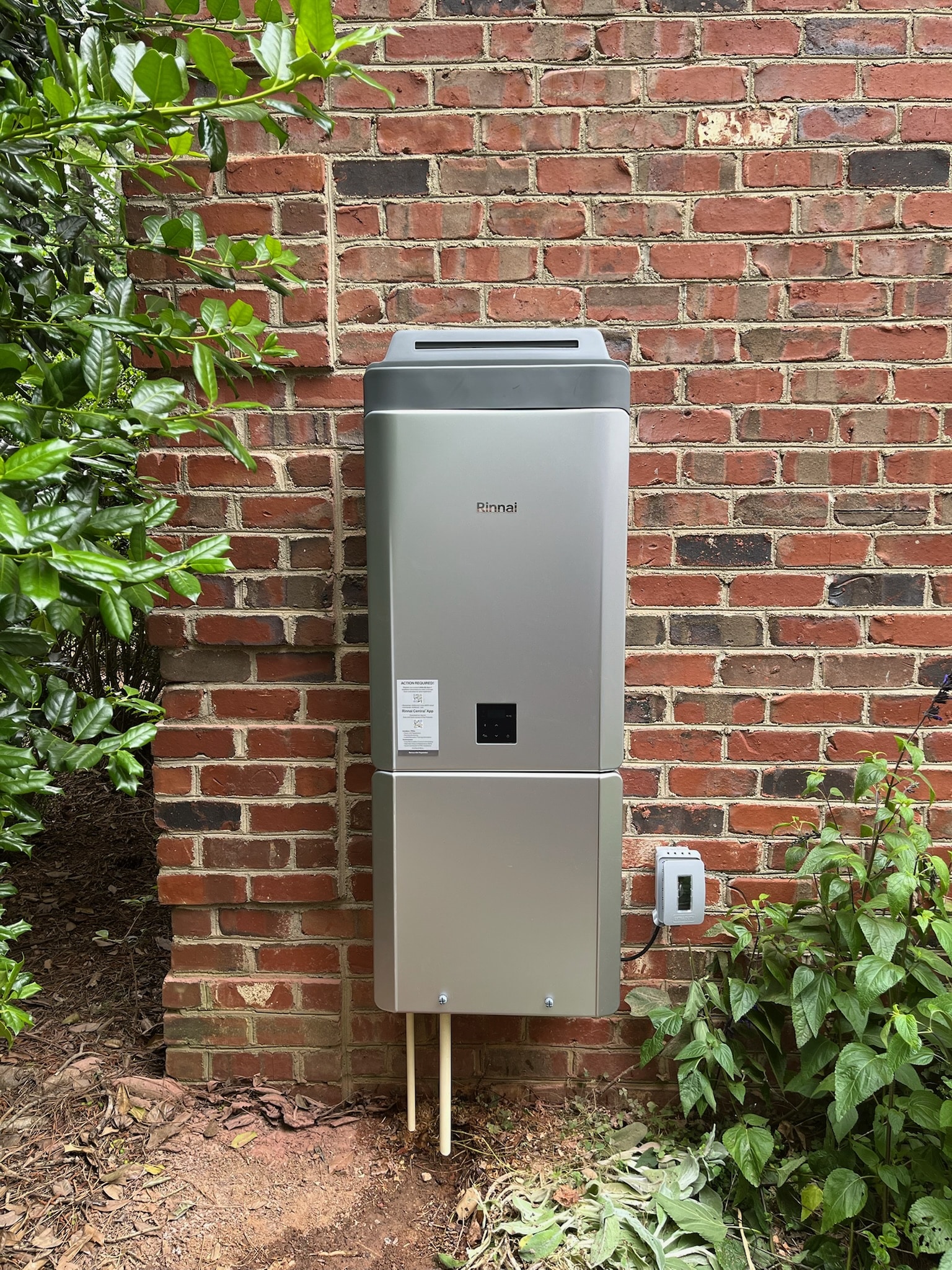
Read all 401 reviews on Google →Some of our recent installs:





Rebates and credits
| Program | Amount | Applies to | Catch |
|---|---|---|---|
| Enbridge Gas North Carolina (formerly Dominion / PSNC) | $300 | Gas tankless, 0.95 UEF or higher — both Rinnai models qualify | Natural-gas-to-natural-gas replacement only; you file within 90 days with your itemized invoice. We’ll help you with the form. |
| Enbridge Gas North Carolina | $100 | Gas storage tank, 0.64 UEF or higher | Same |
| Rinnai 2026 rebate | $100 | RX199iN and RXP199iN | Purchased by Dec 31 2026, installed by Jan 15 2027, claimed by Feb 15 2027 |
| Duke Energy | $500 / $800 | Heat pump water heaters only (50 / 80 gal) | Not tankless, not standard electric, not gas, not Essency |
| Energy Saver NC | up to $1,750 | Heat pump water heaters | Income-limited; registered contractor |
| Federal 25C tax credit | — | — | Expired Dec 31 2025. If you installed a qualifying unit in 2023–2025 and didn’t claim it, talk to your tax preparer about amending. |
We re-check this table every quarter. Utility programs change without notice; the amount on your invoice date is what counts.
Signs your water heater is failing
- No hot water, or it runs out much sooner than it used to
- Rusty or brown hot water, or a metallic smell — the anode is spent and the steel is going
- Water on the floor around the base. If it’s the tank and not a fitting, it’s over
- Popping, rumbling, or banging (sediment)
- A heater past 10–12 years that has just needed its first repair
- A heater in the attic or above a finished ceiling that’s past 8 years — the risk isn’t the heater, it’s the ceiling below it
How to get more years out of the one you have
- Flush it yearly — Just let us know, and we can set you up on a re occurring schedule. with a new install signing up for the ARC flush plan that also extends your ARC warranty to 10 years
- Keep the thermostat at 120°F
- If your home has a pressure-reducing valve on the main, make sure there’s an expansion tank on the heater — without one, a closed system slams the tank every heating cycle
- Put a FloodStop or other sensor on anything above a finished floor
Frequently asked
How much does it cost to replace a water heater in Raleigh?
ARC’s installed flat rate is $2,478 for a 28–40 gallon electric, $2,523 for a 50 gallon electric, $2,703 for a 40 gallon gas, $3,007 for a 50 gallon gas, and $3,056 for a 50 gallon propane, including removal of the old unit and a 5-year parts-and-labor warranty (September 2026). A direct-vent unit adds $950; an expansion tank, if your system needs one, $317.
Do I need a permit to replace my water heater in Wake County?
Some like-for-like replacements in one- or two-family homes qualify for a permit exemption under NC G.S. 160D-1110. Same fuel and location alone are not enough. ARC checks capacity, input, venting, piping, electrical work and the licensed-installation requirements before confirming what applies to your job.
How long does a water heater replacement take?
A tank swap is four hours or less. A tank-to-tankless conversion can take a full day.
Is a tankless worth it for my house?
It depends on simultaneous hot-water use, incoming water temperature, fuel supply and installation costs. A gas tankless is one option for higher demand, but a repair or storage tank may be a better fit. Take the finder above to help start the conversation; ARC confirms sizing on site.
Is the Essency really better than a tank?
Essency is one option to compare with a conventional storage tank or heat pump water heater. The best fit depends on demand, installation space, electrical requirements, operating costs and the warranty terms for the quoted equipment. An attic location or an electric-only home does not settle the choice by itself.
Do you charge to come out and look?
No. On-site quotes are free and the price we quote is the price.
Will my new gas water heater get a rebate?
A gas tankless replacing a gas unit gets $300 from Enbridge Gas NC plus $100 from Rinnai. A standard gas tank of 0.64 UEF or higher gets $100. Electric, Essency and propane-to-propane don’t qualify for utility rebates right now.
Ready?
Schedule online or call. We serve Raleigh, Cary, Apex, Holly Springs, Fuquay-Varina, Garner, Wake Forest, Morrisville, Durham and Chapel Hill from our shop in Fuquay-Varina.
Plumbing Contractor License #36473 · Prices and programs on this page dated September 2026

2406 Waco Commercial Ct
Fuquay-Varina, NC 27526
(919) 888-3500
Serving Wake County, Durham, Chapel Hill & the Clayton area