
Rinnai Tankless Water Heater Installation in Raleigh and Wake County
ARC Plumbing installed or repaired more than 250 water heaters in Wake County in the past 12 months
NC Plumbing Contractor License #36473. 5.0 stars across 387 Google reviews.
5-year parts & labor warranty on qualified new equipment
Insured and Bonded Technicians
Free In-Home Quotes
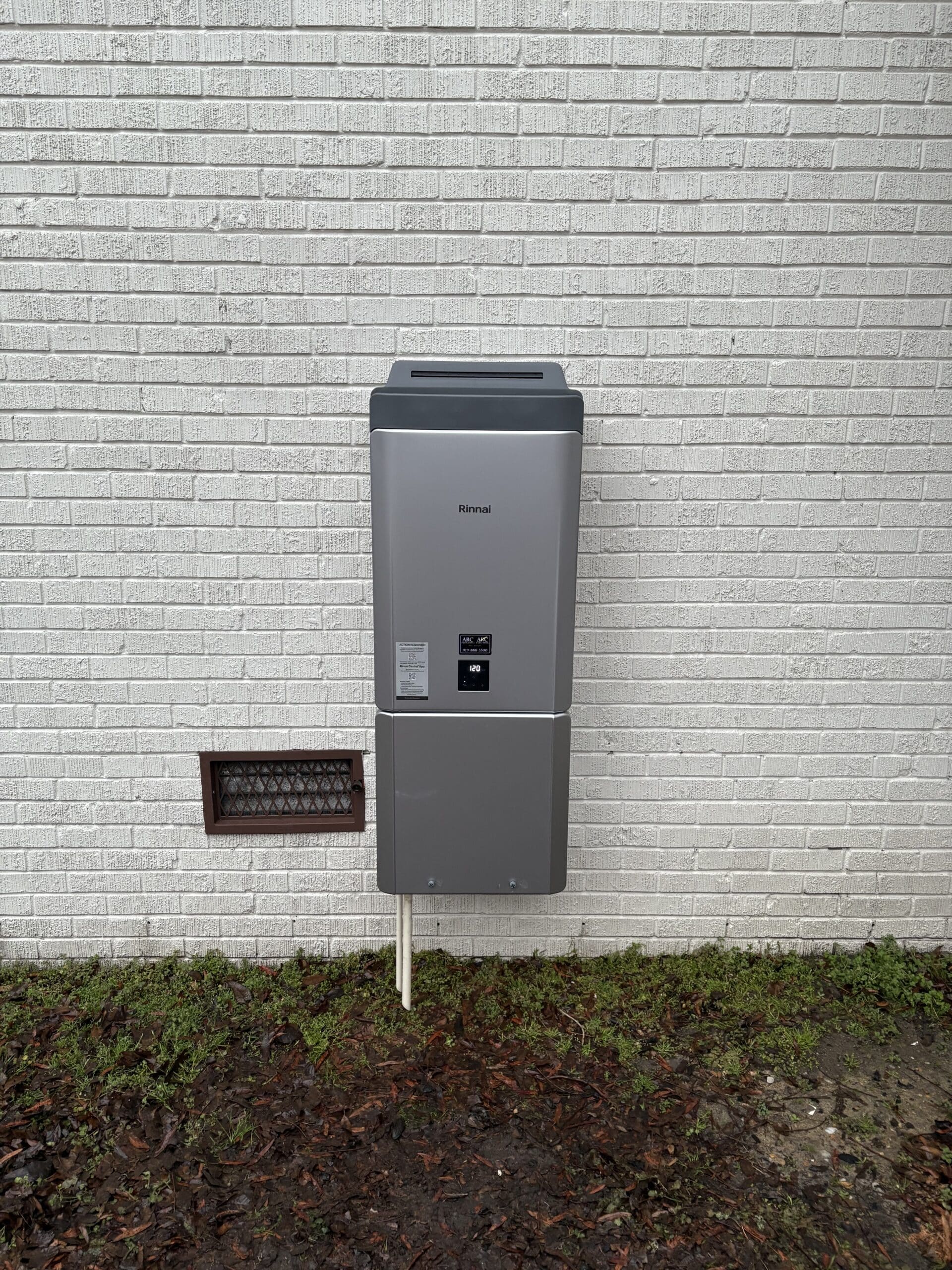
ARC Plumbing installs one tankless line: the Rinnai SENSEI RX199 and RXP199. Installed flat rate $5,141 for the RX199, $5,845 for the RXP199, including removal of your old heater, the electrical connection by ARC Electric, the condensate drain and neutralizer, and your first annual flush. September 2026 pricing, published here so you can check it against your quote.
- 15-year heat exchanger, 5-year parts, 5-year labor when registered within 90 days
- $300 Enbridge Gas NC + $100 Rinnai rebate on a natural-gas replacement
- Conversions from a tank done in one day
- Not sure tankless is right? Take the finder — it’ll tell you no when it’s no
Three reasons we’d tell you not to go tankless
We install a lot of these and we’d rather lose the job than sell you the wrong one.
Your house is all-electric
A gas tankless needs gas. Running a new gas service to a house that has none costs more than the heater. Whole-house electric tankless units need several dedicated high-amp circuits and a panel most homes don’t have, which is why we don’t install them. If you’re on electric, the answer is a tank or the Essency EXR, and we’ll say so.
Two people, two bathrooms
A standard 50 gallon tank is likely sufficient capacity, won’t run out on you, and it’s paid for twice over before the tankless pays back.
You expect “endless” for three showers at once
See the flow-rate section below. A single RX199 is generous for two showers and a washer running together at Raleigh water temperatures. It is not infinite. Big homes with four full baths sometimes need two units, and we’ll tell you before you sign, not after.
RX199 vs RXP199: one difference
Both are Rinnai SENSEI RX-series condensing units: 199,000 BTU maximum input, 11.1 gallons per minute maximum flow, 0.98 Uniform Energy Factor, indoor or outdoor mounting, freeze protection to -22°F indoors (-4°F outdoors) with power connected.
RX199 $5,141
- No recirculation pump
- Freeze-protection kit not included
- Wi-Fi module +$258
Who it’s for: compact homes where the far bathroom is close to the heater.
RXP199 $5,845
- Built-in multi-speed recirculation pump
- Freeze-protection kit included
- Wi-Fi module included
Who it’s for: larger or longer homes where you’re tired of waiting on hot water — the pump keeps it at the tap.
The recirculation pump is a comfort feature, not a capacity feature. It doesn’t make more hot water; it makes hot water arrive faster and wastes less down the drain. If the complaint in your house is “the shower takes forever to get hot,” that’s the RXP. If it’s “we run out,” either unit fixes that.
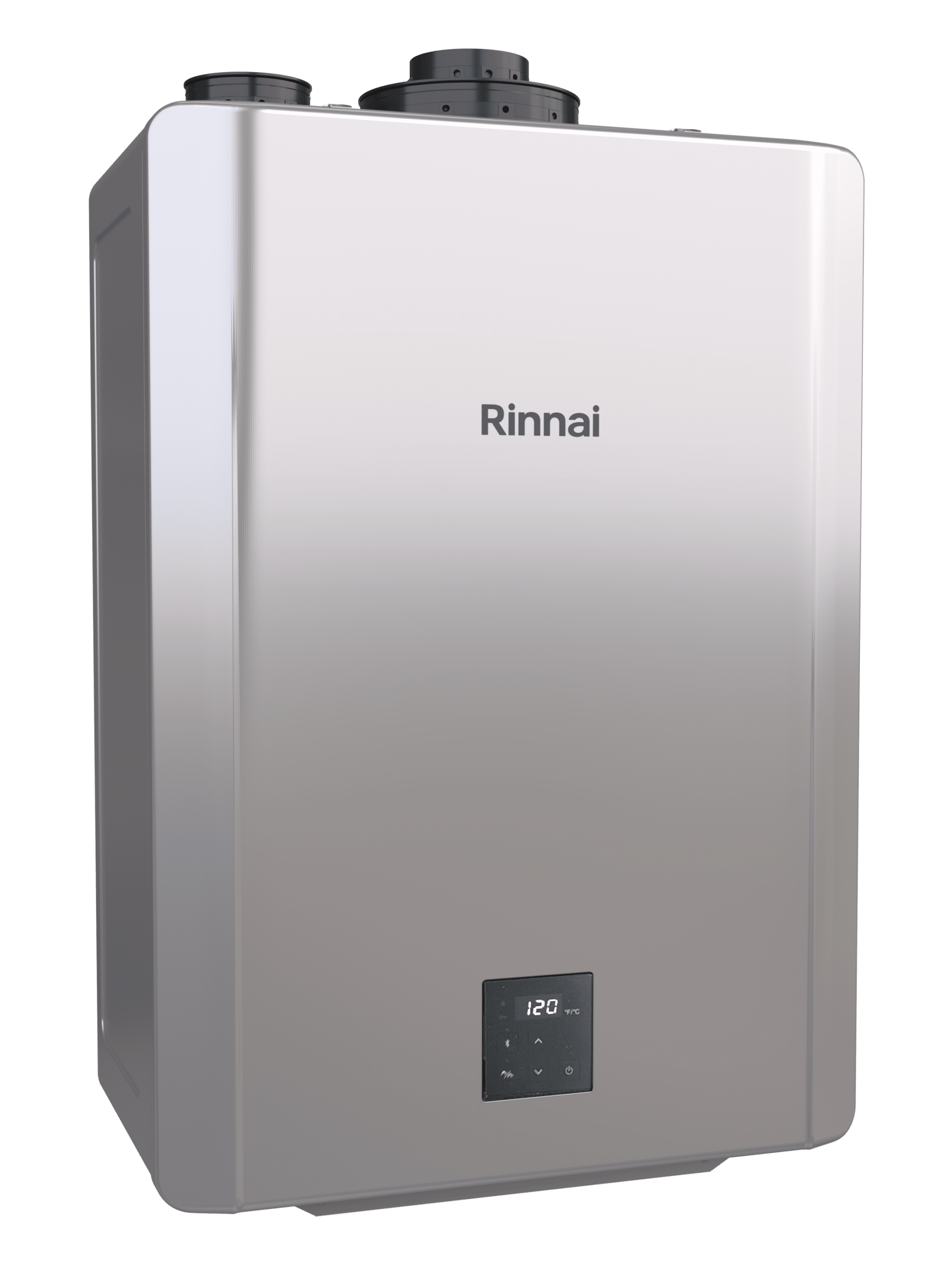
Flow rate at Raleigh water temperatures
The 11.1 GPM on the spec sheet is at a small temperature rise. Raleigh’s incoming water runs about 52–57°F most of the year. Heating that to a 105°F shower, Rinnai’s own sizing chart puts the RX199 at roughly 5.7 to 6.2 gallons per minute — enough for two showers with 2-GPM heads and a washing machine at the same time. Three showers plus a dishwasher will drop the temperature. That’s the sizing conversation we have on site, and it’s why a family with four full baths sometimes gets two units.
Raleigh and Cary water is soft (about 1.5 grains per gallon), so scale isn’t the enemy here that it is elsewhere. Rinnai still requires an annual descaling flush to keep the warranty in force; the first one is on us.
at 52–57°F incoming water (Rinnai sizing map)
What a tank-to-tankless conversion costs
The flat rate covers replacing a tankless with a tankless, or a tank with a tankless where the gas line, location and venting already work. Most conversions need some of the following. Here is a recent RXP199 conversion so you know what “up to” looks like:
| Line | Price |
|---|---|
| Rinnai RXP199 installed (unit, labor, removal, electrical connection, first yearly flush) | $5,845 |
| New ¾” gas line to the heater location | $1,789 |
| New gas pressure regulator | $225 |
| Relocating the heater to an exterior wall | $797 |
| Permit and inspection (required for a tank-to-tankless change) | $289 |
| HALO ION 2.0 Plus water conditioner (optional — scale and corrosion protection for the exchanger) | $626 |
| Whole-house sediment filter (optional) | $470 |
| Rinnai Wi-Fi module (included with RXP) | $0 |
| Total | $10,017 |
Take out the two optional items and that job is $8,921. A conversion where the existing ¾” gas line and location already work is the flat rate plus the $289 permit. Everything on this list is a fixed price; nothing is time-and-materials.
What drives the price up: a gas meter that can’t carry the extra load, a location with no exterior wall within reach for the concentric vent, and moving the unit.
What doesn’t cost extra with us: the electrical connection (ARC Electric does it as part of the job), the condensate drain and neutralizer a condensing unit needs indoors or in an attic, removal and disposal of your old heater, and the first flush.
What’s involved, and how long
Tankless-for-tankless: half a day
Tank-to-tankless: up to a full day
Before we quote, we check
- Gas service size and pressure
- Gas line size from the meter to the heater
- The venting path
- Access and clearances at the proposed spot
- Where the condensate can drain
Those five things decide the price. The quote is free and it’s the number you’ll pay.
Propane homes
Same RX199 or RXP199 — the unit is field-selectable for propane. The Enbridge rebate is natural-gas only, so a propane conversion gets the $100 Rinnai rebate and nothing else. We say that up front because other sites in the Triangle don’t.
Warranty — ARC’s and Rinnai’s, and what you have to do to keep them
ARC Plumbing warrants every Rinnai it installs for 5 years, parts and labor. That’s ours, on top of the manufacturer’s, and it’s the same coverage we put on every water heater we install.
Rinnai SENSEI RX residential: 15 years on the heat exchanger (or 12,000 operating hours), 5 years on all other parts, and labor for 1 year, extended to 5 years if the unit is registered within 90 days of installation. The heat exchanger coverage drops to 8 years if the unit is run above 160°F — we set it at 120°F.
Annual descaling is required by Rinnai to maintain coverage. Your first flush is included when you schedule it the day we install; after that it’s $273 a year, or part of the ARC flush plan.
Minor tankless repairs — flow sensor, igniter, error-code diagnosis and part swap — are a flat $479 on any Rinnai, whether we installed it or not.
Why we only install Rinnai
Because the callbacks are on us. We standardized on one line so every tech on the truck knows the unit, we stock the parts, and a repair is one visit instead of a parts order and a second trip.
Rinnai’s 15-year heat exchanger warranty is the longest of the major condensing lines we’ve worked with, and the RX series’ 0.98 UEF clears the 0.95 threshold for the $300 Enbridge Gas rebate with room to spare.
Rinnai installs across Wake County
What tankless customers say
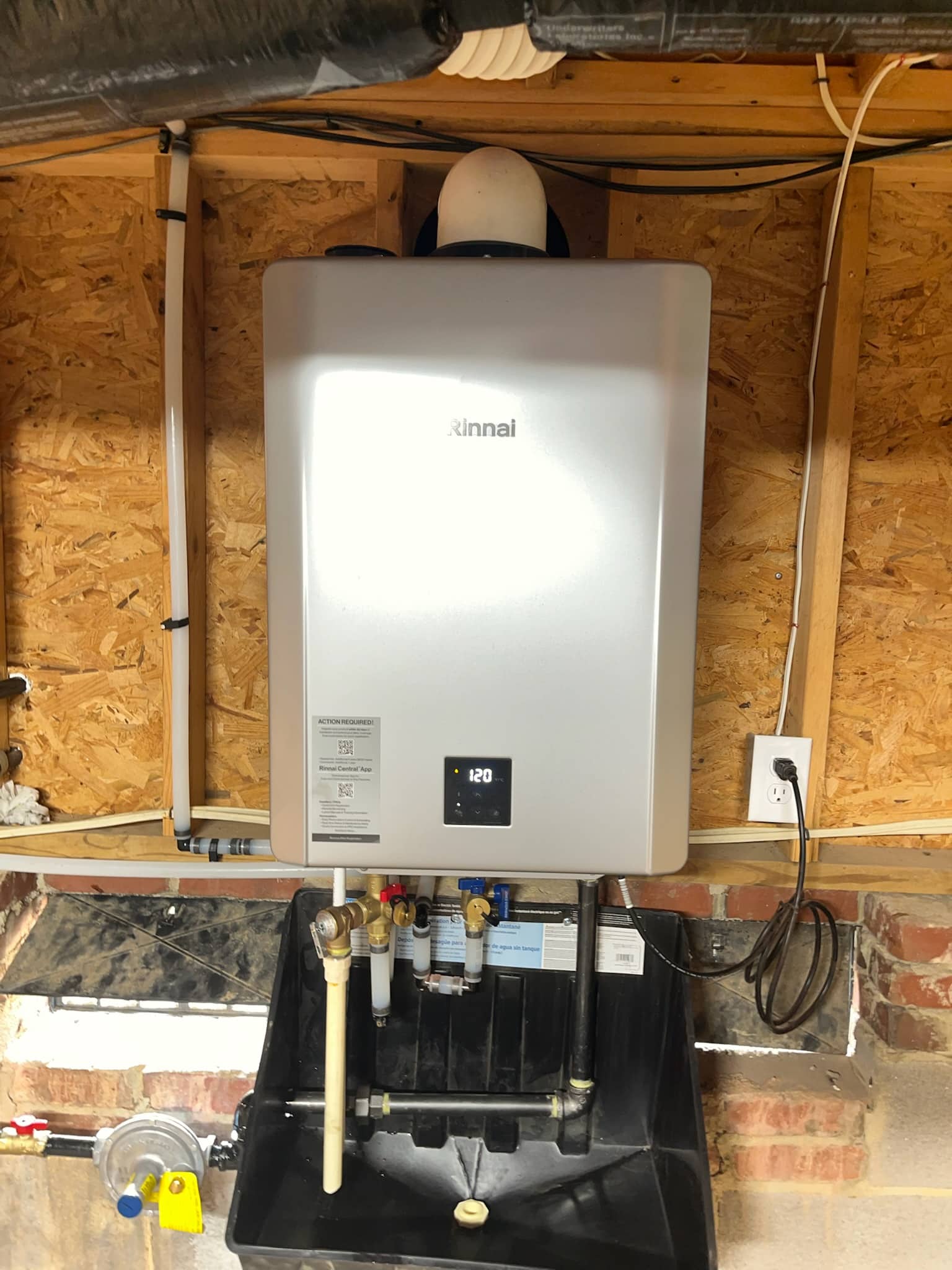
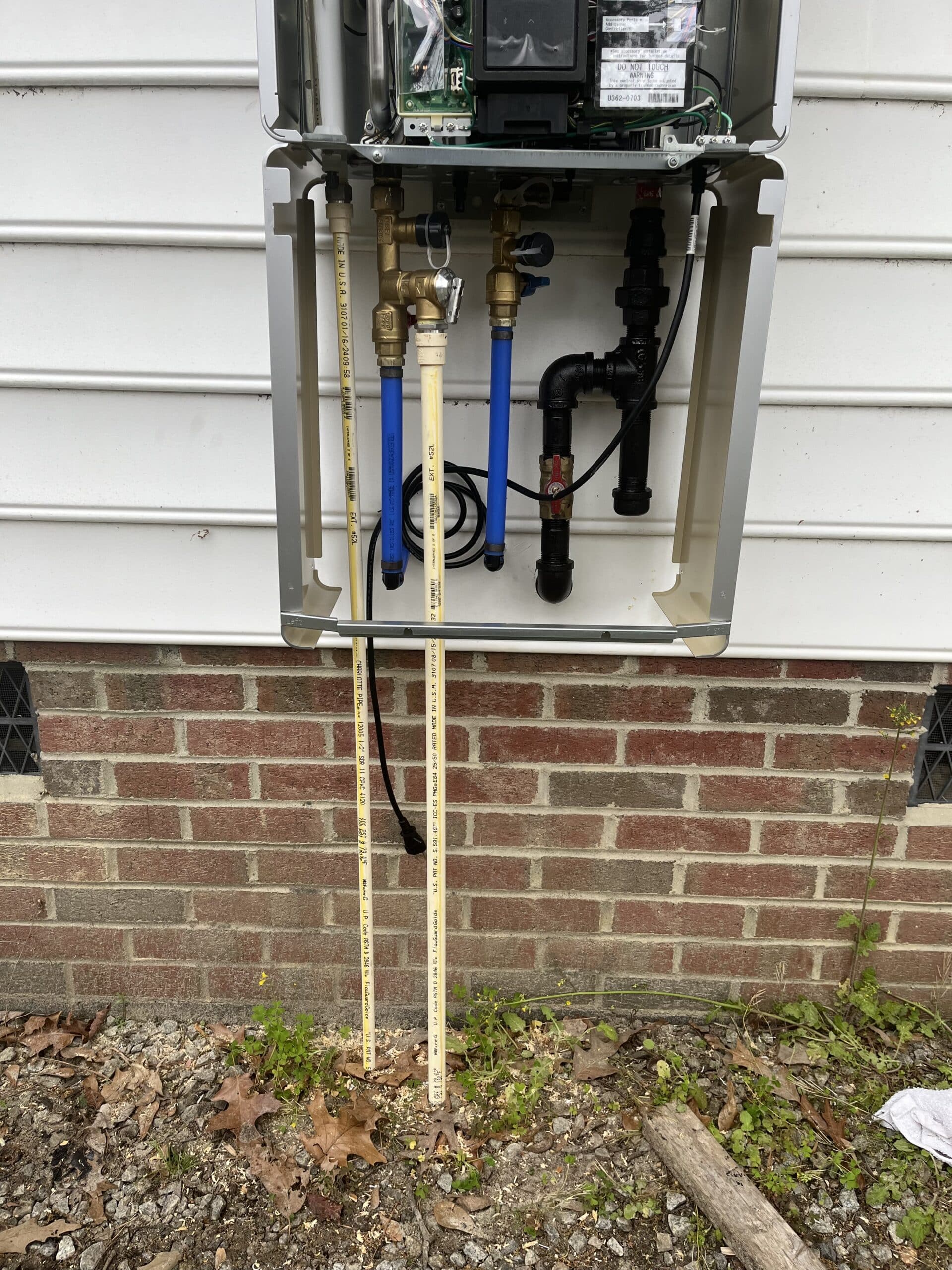
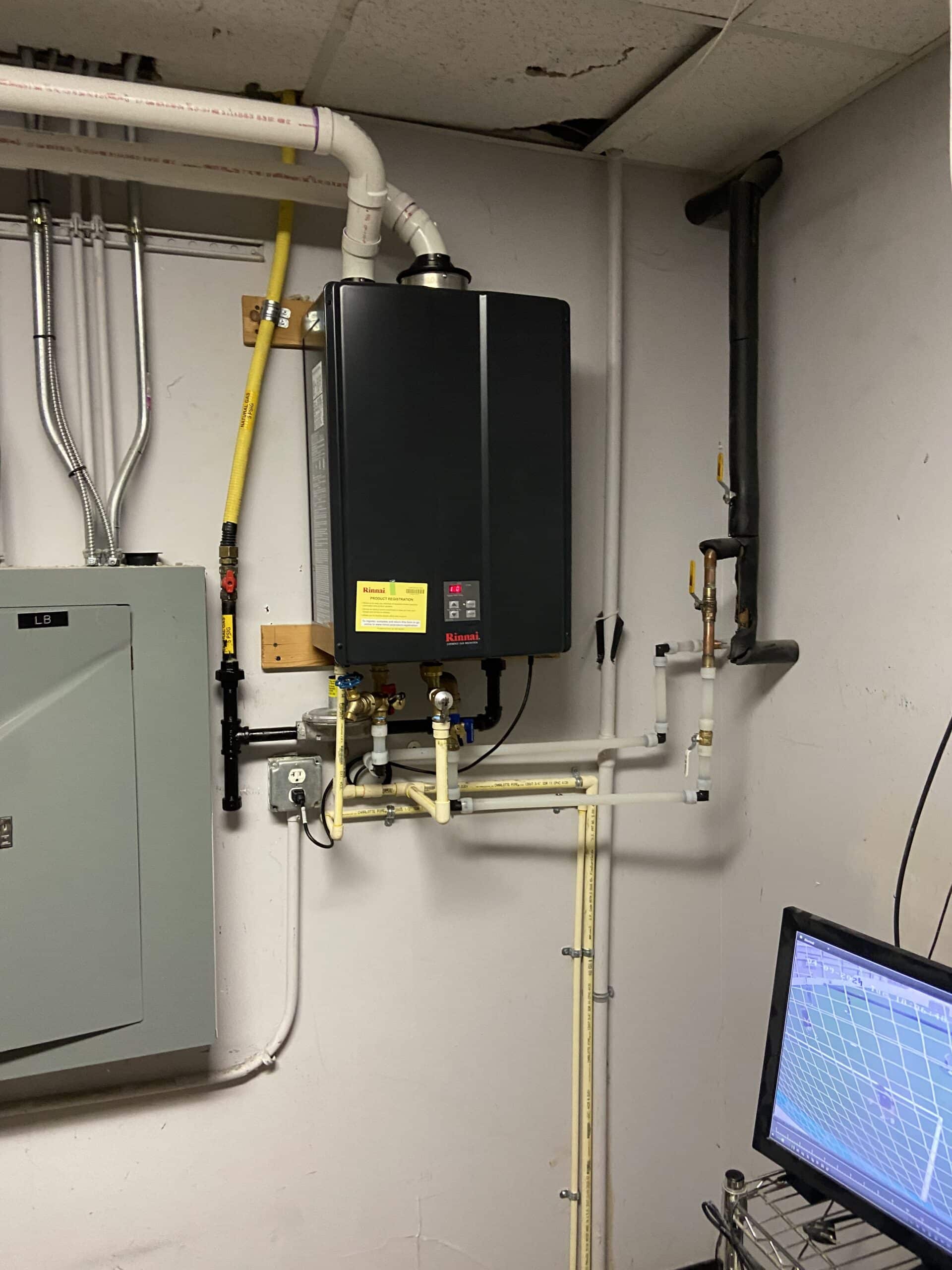
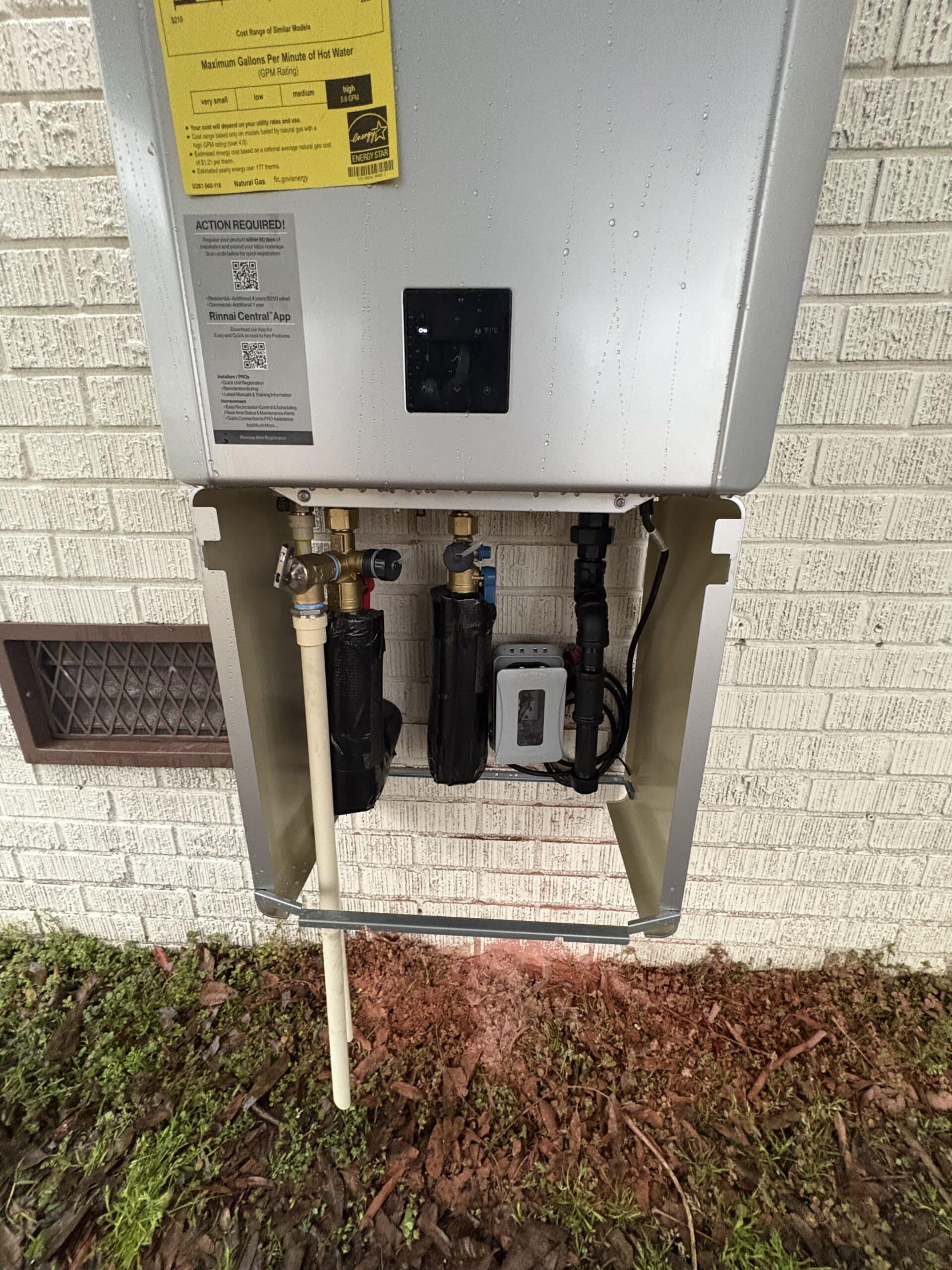
Read all 387 reviews on Google →Some of our tankless installs around Wake County
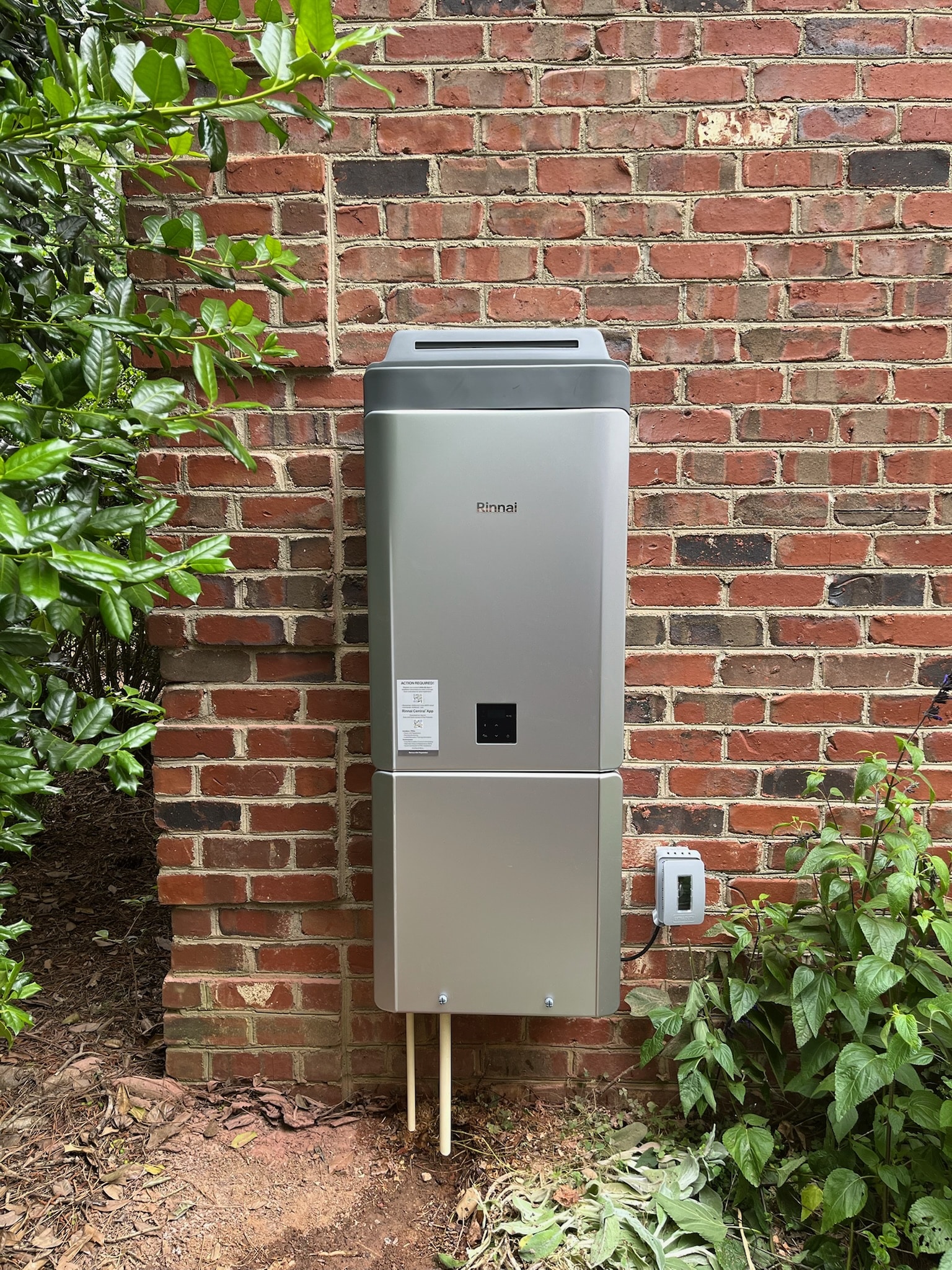
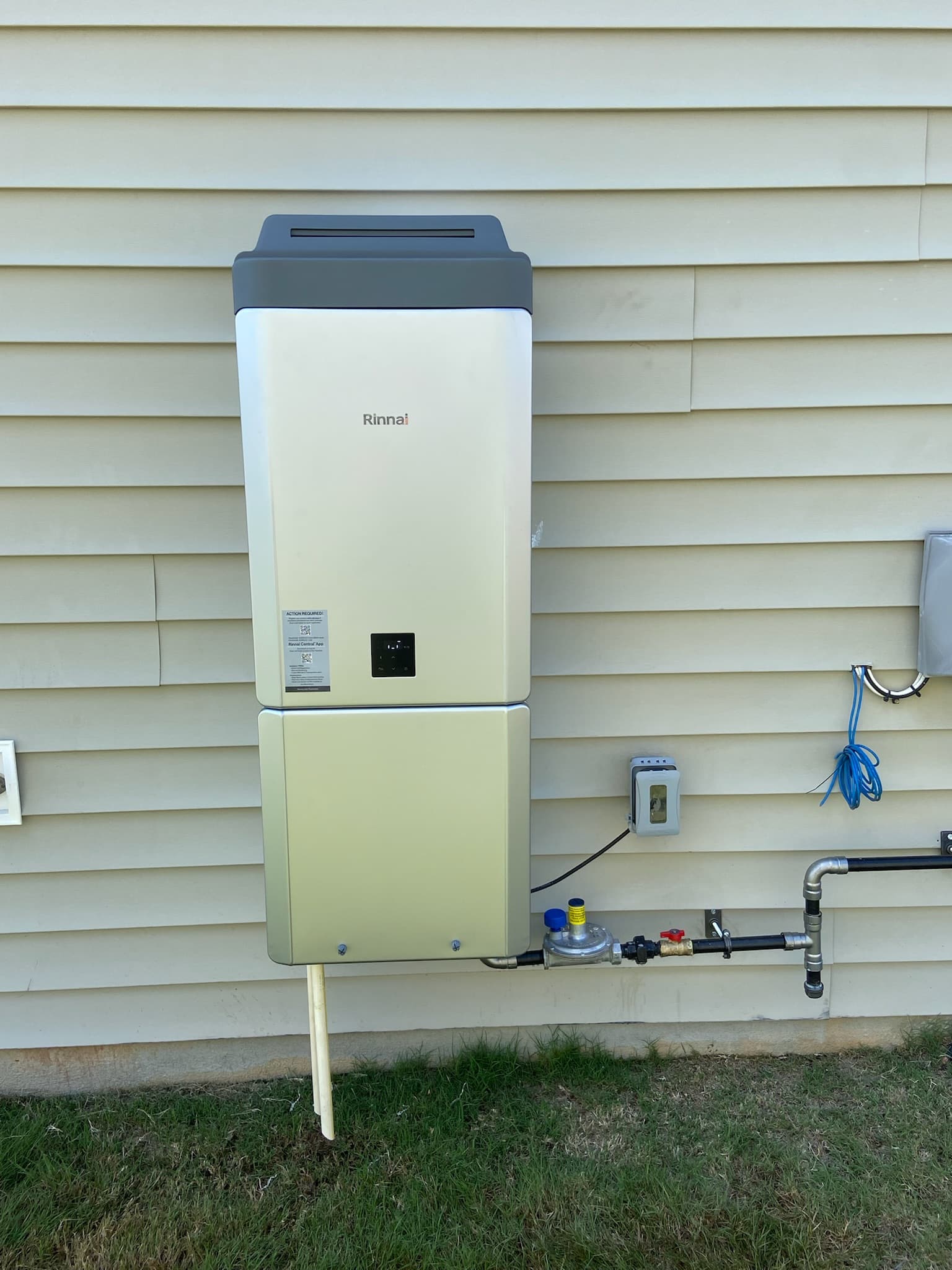
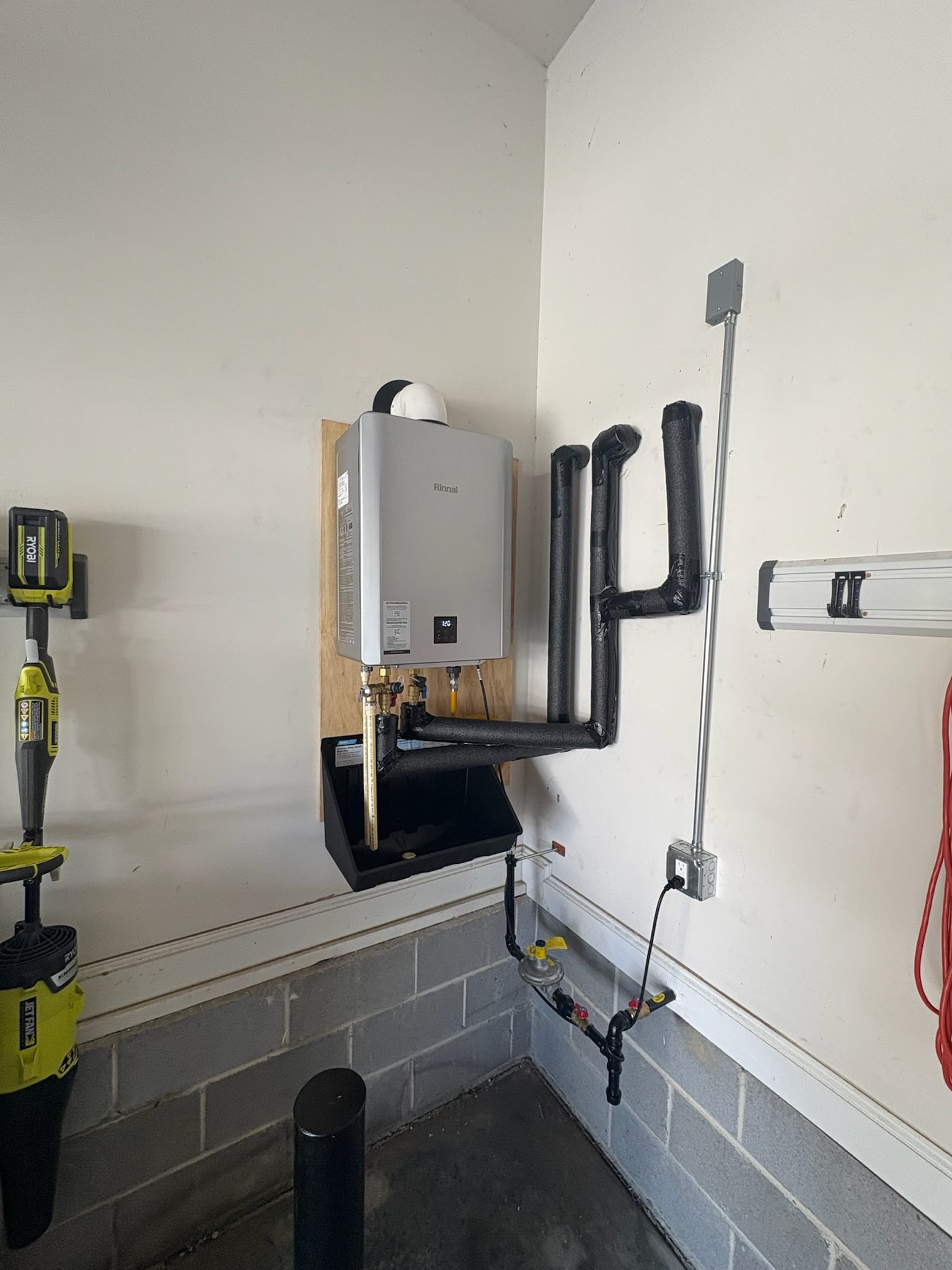
Rebates on a Rinnai
Frequently asked
How much does a tankless water heater cost to install in Raleigh?
ARC’s flat rate is $5,000 – $5,500 for a Rinnai RX199 and $5,750 – $6,000 for an RXP199, installed (September 2026). A tank-to-tankless conversion that needs a new ¾” gas line, relocation and a permit runs about $8,000 – $9,000. The itemized example above is a real job.
What’s the difference between the RX199 and the RXP199?
The RXP199 has a built-in recirculation pump, the freeze-protection kit, and the Wi-Fi module. Same heater otherwise. $704 more.
How long do Rinnai tankless water heaters last?
Rinnai warrants the heat exchanger for 15 years or 12,000 operating hours, roughly double the 6-year tank warranty on a conventional heater. With annual descaling, 20 years is a reasonable expectation; without it, less.
Do tankless water heaters need maintenance?
Yes — an annual descaling flush, required by Rinnai to keep the warranty. $273, first one free with your install.
Do I need a permit to go tankless in Wake County?
Yes. Changing from a tank to a tankless changes the input and venting, which takes it outside the NC replacement exemption. We pull it; it was $289 on the job above.
Will it work if the power goes out?
No. A gas tankless needs 120V for its controls and fan. If that matters to you, the Essency EXR has an optional battery backup and a tank behind it.
Is a tankless right for my home?
Take the finder on our water heater page — it applies the rules we use on site, including the three cases where we’d tell you no.
Ready?
Free on-site quote, no trip charge. Schedule online or call.
Plumbing Contractor License #36473 · Prices and programs on this page dated September 2026

2406 Waco Commercial Ct
Fuquay-Varina, NC 27526
(919) 888-3500
Serving Wake County, Durham, Chapel Hill & the Clayton area